


Steel vs Carbon vs Aluminium vs Titanium
A practical guide to frame materials and what really sets them apart.
Choosing a frame material that fits how you really ride
Why frame material matters more than most people think:
Bikes can get pretty complicated when it comes to deciding on a build. Groupsets, wheels, tyres, gearing, cockpit choices. Once you add frame material into the mix, it can feel even harder to know what is right for you. The truth is, the material you choose comes down to a lot of personal factors and how you actually ride, not just what looks good on paper.
A lot of the industry is driven by marketing and by what professional riders are using. While that works at the very top level of the sport, it does not always translate to real world riding. The bike that works for a pro riding at race intensity, with a team car behind them, is often very different from what most of us actually need.
This guide breaks down the different frame materials, what they offer, and what really sets them apart. At Gloria, we care about longevity, accessibility, and making products that simply work for long days in the saddle. That is why we build in titanium. Read on to understand the differences and why titanium makes the most sense for us.
How we think about materials at Gloria.
Titanium has always been at the forefront of Carlos’ interest in cycling. When creating Gloria five years ago, he knew one thing from the start, titanium was the material Gloria needed to be built around. Our philosophy has always been simple: make well considered products at an accessible price, designed by riders for riders. That thinking carries through everything we do, from the craftsmanship of the frames to how they feel on long days in the saddle.
Bikes can get pretty complicated when it comes to deciding on a build. Groupsets, wheels, tyres, gearing, cockpit choices. Once you add frame material into the mix, it can feel even harder to know what is right for you. The truth is, the material you choose comes down to a lot of personal factors and how you actually ride, not just what looks good on paper.
A lot of the industry is driven by marketing and by what professional riders are using. While that works at the very top level of the sport, it does not always translate to real world riding. The bike that works for a pro riding at race intensity, with a team car behind them, is often very different from what most of us actually need.
This guide breaks down the different frame materials, what they offer, and what really sets them apart. At Gloria, we care about longevity, accessibility, and making products that simply work for long days in the saddle. That is why we build in titanium. Read on to understand the differences and why titanium makes the most sense for us.
How we think about materials at Gloria.
Titanium has always been at the forefront of Carlos’ interest in cycling. When creating Gloria five years ago, he knew one thing from the start, titanium was the material Gloria needed to be built around. Our philosophy has always been simple: make well considered products at an accessible price, designed by riders for riders. That thinking carries through everything we do, from the craftsmanship of the frames to how they feel on long days in the saddle.

Steel
What steel feels like on the road:
Steel is the classic frame material. It is old school in the best sense of the word and has a deep history in cycling, ridden by legends from Sean Yates to Eddy Merckx. Steel is known for being reliable, versatile, and having a springy, forgiving ride quality that works well for long days on the road. It has a loyal following, and its traditional look, often with longer straight top tubes, still appeals to many riders today.
That said, steel does come with trade offs. It is the heaviest of the common frame materials, and in a world where lighter is often seen as better, many riders now look elsewhere. Over time, steel can also rust if not properly protected. It is also a softer material, meaning it can flex more under load, which can result in a small loss of efficiency when putting power down.
Pros:
Ride quality
Steel absorbs road buzz and vibrations well, resulting in a smooth and comfortable ride.
Durability and longevity
A strong material that, when cared for, can last for many years and is resistant to fatigue.
Repairability
Steel frames can be repaired if damaged, giving them a long life and a true workhorse reputation.
Aesthetics
A classic, timeless look that many riders still love.
Affordability
Generally more affordable than carbon or titanium, although high quality steel frames can approach similar prices.
Trade offs:
Corrosion risk
Steel can rust over time if not well protected from the elements.
Older standards and compatibility
Many steel frames use older geometry standards and may not support modern features such as wide tyres or multiple mounting points.
Lower stiffness and efficienc
Its softer nature means it is less stiff, which can result in reduced efficiency compared to other materials.
Steel is the classic frame material. It is old school in the best sense of the word and has a deep history in cycling, ridden by legends from Sean Yates to Eddy Merckx. Steel is known for being reliable, versatile, and having a springy, forgiving ride quality that works well for long days on the road. It has a loyal following, and its traditional look, often with longer straight top tubes, still appeals to many riders today.
That said, steel does come with trade offs. It is the heaviest of the common frame materials, and in a world where lighter is often seen as better, many riders now look elsewhere. Over time, steel can also rust if not properly protected. It is also a softer material, meaning it can flex more under load, which can result in a small loss of efficiency when putting power down.
Pros:
Ride quality
Steel absorbs road buzz and vibrations well, resulting in a smooth and comfortable ride.
Durability and longevity
A strong material that, when cared for, can last for many years and is resistant to fatigue.
Repairability
Steel frames can be repaired if damaged, giving them a long life and a true workhorse reputation.
Aesthetics
A classic, timeless look that many riders still love.
Affordability
Generally more affordable than carbon or titanium, although high quality steel frames can approach similar prices.
Trade offs:
Corrosion risk
Steel can rust over time if not well protected from the elements.
Older standards and compatibility
Many steel frames use older geometry standards and may not support modern features such as wide tyres or multiple mounting points.
Lower stiffness and efficienc
Its softer nature means it is less stiff, which can result in reduced efficiency compared to other materials.

Aluminium
Aluminium has become one of the most common frame materials in modern cycling, largely because it allows brands to offer lightweight bikes at a more accessible price point. It is easy to manufacture at scale, relatively inexpensive compared to carbon or titanium, and can be shaped to create very stiff frames.
The appeal of aluminium
For many riders, aluminium represents a practical entry point. It is lighter than steel, resistant to rust, and capable of delivering sharp, responsive handling. For racing, commuting, or riders looking for a no-nonsense frame, aluminium can make a lot of sense.
Where aluminium works best
Aluminium suits riders who prioritise responsiveness and value, particularly for shorter rides or more performance-focused use. It is commonly found in race bikes, winter bikes, and entry- to mid-level builds where weight and cost are key considerations.
Pros
Affordability
Aluminium frames offer excellent value for money, making lightweight bikes more accessible to a wider range of riders.
Low weight
Lighter than steel and often comparable to entry-level carbon frames.
Stiff and responsive
Delivers direct power transfer and sharp handling, particularly noticeable under acceleration.
Corrosion resistant
Aluminium does not rust, making it well suited to year-round riding and wet conditions.
Trade-offs
Ride comfort
That stiffness can come at the cost of comfort. Road vibration is transmitted more directly through the frame, which can lead to fatigue on longer rides.
Finite fatigue life
Unlike steel or titanium, aluminium does not last indefinitely and can wear out over time with sustained use.
Limited repairability
If damaged, aluminium frames are difficult to repair and often need replacing entirely.
Why aluminium is not where we focus
At Gloria, we think long days, mixed surfaces, and real-world riding matter more than outright stiffness. While aluminium has its place, it does not deliver the balance of comfort, longevity, and ride feel that aligns with how we believe bikes should be ridden and owned.
The appeal of aluminium
For many riders, aluminium represents a practical entry point. It is lighter than steel, resistant to rust, and capable of delivering sharp, responsive handling. For racing, commuting, or riders looking for a no-nonsense frame, aluminium can make a lot of sense.
Where aluminium works best
Aluminium suits riders who prioritise responsiveness and value, particularly for shorter rides or more performance-focused use. It is commonly found in race bikes, winter bikes, and entry- to mid-level builds where weight and cost are key considerations.
Pros
Affordability
Aluminium frames offer excellent value for money, making lightweight bikes more accessible to a wider range of riders.
Low weight
Lighter than steel and often comparable to entry-level carbon frames.
Stiff and responsive
Delivers direct power transfer and sharp handling, particularly noticeable under acceleration.
Corrosion resistant
Aluminium does not rust, making it well suited to year-round riding and wet conditions.
Trade-offs
Ride comfort
That stiffness can come at the cost of comfort. Road vibration is transmitted more directly through the frame, which can lead to fatigue on longer rides.
Finite fatigue life
Unlike steel or titanium, aluminium does not last indefinitely and can wear out over time with sustained use.
Limited repairability
If damaged, aluminium frames are difficult to repair and often need replacing entirely.
Why aluminium is not where we focus
At Gloria, we think long days, mixed surfaces, and real-world riding matter more than outright stiffness. While aluminium has its place, it does not deliver the balance of comfort, longevity, and ride feel that aligns with how we believe bikes should be ridden and owned.

Carbon
Carbon fibre has become the dominant frame material in modern performance cycling. Its biggest advantage is how precisely it can be engineered, allowing manufacturers to tune stiffness, weight, and aerodynamics in ways no metal frame can match. This has made carbon the go-to choice for racing and high-performance bikes.
Carbon excels on paper and in controlled environments, offering impressive efficiency and speed. It allows designers to create complex shapes that maximise power transfer and aerodynamic gains, which is why it dominates the professional racing scene.
Where carbon works best
Carbon is best suited to riders focused on outright performance, speed, and efficiency. It shines in racing, fast group rides, and short to medium-length rides where weight savings and stiffness are most noticeable. For riders chasing marginal gains, carbon offers clear advantages.
Pros
Lightweight
Carbon frames are among the lightest available, helping bikes feel fast and responsive under acceleration.
Highly tuneable ride characteristics
Manufacturers can stiffen or soften specific areas of the frame to optimise performance.
Aerodynamic potential
Carbon allows for complex tube shapes that reduce drag and improve efficiency at speed.
Performance-focused
Ideal for racing and riders prioritising speed over long-term comfort or versatility.
Trade-offs
Durability over time
Carbon can hide internal damage from impacts or crashes, making long-term ownership less predictable.
Repair complexity
While repairs are possible, they are often costly and not always practical.
Cost
High-quality carbon frames are typically more expensive than aluminium or steel alternatives.
Less forgiving for real-world use
Travel damage, crashes, and everyday knocks can be more consequential than with metal frames.
Why carbon is not where we focus
At Gloria, we value longevity, ride feel, and confidence over chasing marginal performance gains. While carbon excels in racing environments, it does not always align with long-term ownership or the varied conditions of real-world riding. For us, a bike should feel just as good after years of use as it did on day one.
Carbon excels on paper and in controlled environments, offering impressive efficiency and speed. It allows designers to create complex shapes that maximise power transfer and aerodynamic gains, which is why it dominates the professional racing scene.
Where carbon works best
Carbon is best suited to riders focused on outright performance, speed, and efficiency. It shines in racing, fast group rides, and short to medium-length rides where weight savings and stiffness are most noticeable. For riders chasing marginal gains, carbon offers clear advantages.
Pros
Lightweight
Carbon frames are among the lightest available, helping bikes feel fast and responsive under acceleration.
Highly tuneable ride characteristics
Manufacturers can stiffen or soften specific areas of the frame to optimise performance.
Aerodynamic potential
Carbon allows for complex tube shapes that reduce drag and improve efficiency at speed.
Performance-focused
Ideal for racing and riders prioritising speed over long-term comfort or versatility.
Trade-offs
Durability over time
Carbon can hide internal damage from impacts or crashes, making long-term ownership less predictable.
Repair complexity
While repairs are possible, they are often costly and not always practical.
Cost
High-quality carbon frames are typically more expensive than aluminium or steel alternatives.
Less forgiving for real-world use
Travel damage, crashes, and everyday knocks can be more consequential than with metal frames.
Why carbon is not where we focus
At Gloria, we value longevity, ride feel, and confidence over chasing marginal performance gains. While carbon excels in racing environments, it does not always align with long-term ownership or the varied conditions of real-world riding. For us, a bike should feel just as good after years of use as it did on day one.
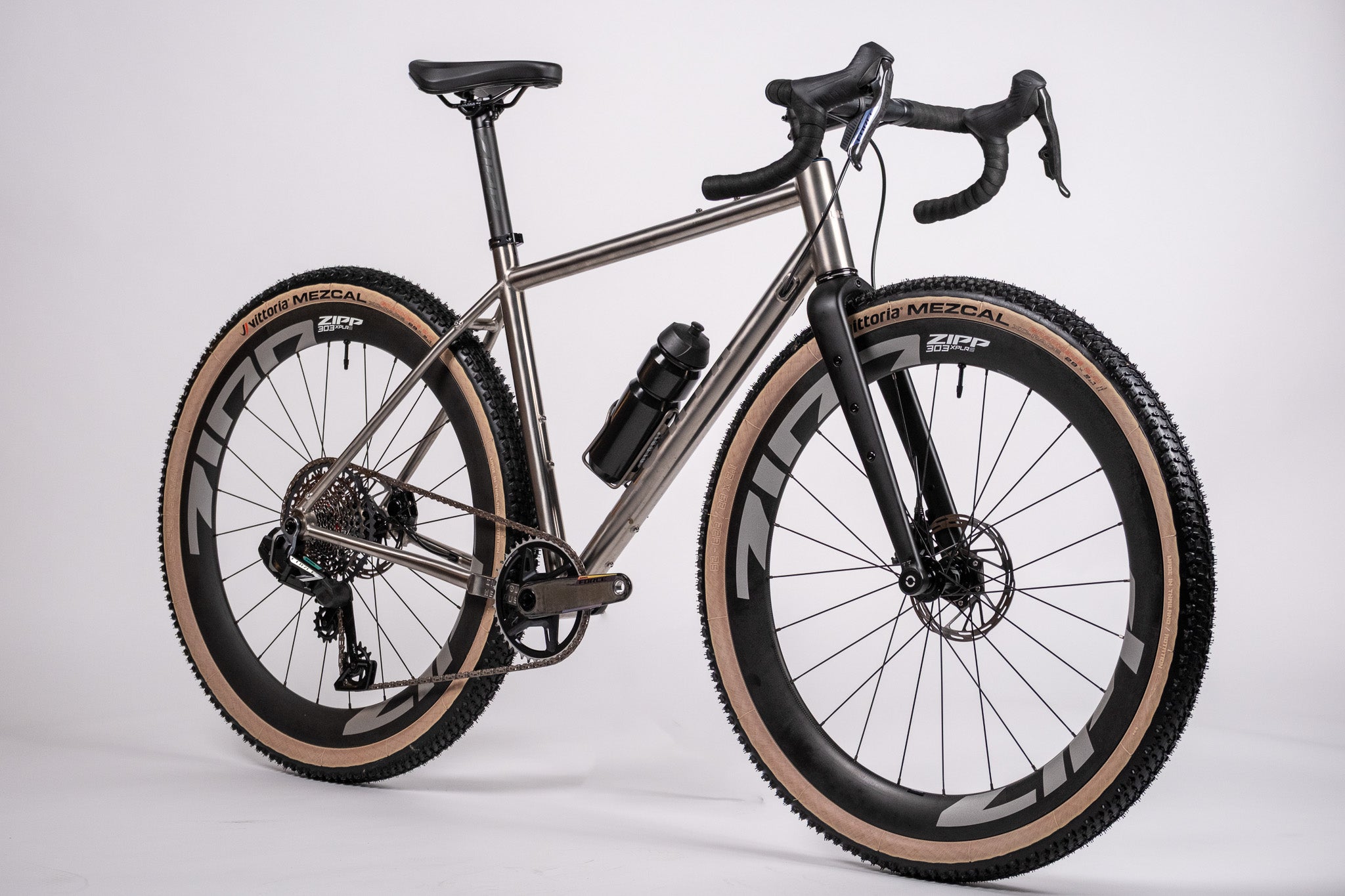
Titanium
Titanium has long been regarded as one of the most refined frame materials in cycling. It combines strength, flexibility, and durability in a way few other materials can, resulting in a ride that feels smooth, composed, and efficient over long distances. Rather than chasing outright stiffness or minimum weight, titanium prioritises ride quality and longevity.
Titanium frames are naturally resistant to corrosion and fatigue, meaning they maintain their ride characteristics year after year. This makes titanium particularly well suited to real-world riding across mixed surfaces and changing conditions.
Where titanium works best
Titanium excels for riders who value comfort, durability, and versatility. It performs exceptionally well on long road rides, rough lanes, gravel, and all-road use, offering confidence and consistency across varied terrain. For riders looking for one bike to do many things well, titanium is hard to beat.
Pros
Exceptional ride quality
Titanium absorbs road vibration extremely well, reducing fatigue on long rides while still feeling responsive under power.
Longevity
Titanium does not rust, corrode, or fatigue in the same way as aluminium or steel, making it a true lifetime material.
Strength-to-weight balance
Strong and lightweight without feeling overly stiff or harsh on imperfect roads.
Low maintenance
No paint to chip and minimal concern about weather, storage, or year-round use.
Versatility
Equally at home on road, gravel, and mixed-surface builds, adapting easily to different riding styles.
Trade-offs
Higher initial cost
Titanium frames require specialised materials and skilled fabrication, resulting in a higher upfront cost.
Manufacturing complexity
Fewer brands work with titanium due to the expertise required, which can limit availability and lead times.
Why we build in titanium
At Gloria, we believe a bike should be built once and enjoyed for years. Titanium aligns with our focus on long days in the saddle, mixed terrain, and real-world riding conditions. It delivers comfort without sacrificing efficiency and durability without compromise, making it the foundation of how we design and build our bikes.
Explore our range
Have questions about titanium or choosing the right build? Get in touch
Titanium frames are naturally resistant to corrosion and fatigue, meaning they maintain their ride characteristics year after year. This makes titanium particularly well suited to real-world riding across mixed surfaces and changing conditions.
Where titanium works best
Titanium excels for riders who value comfort, durability, and versatility. It performs exceptionally well on long road rides, rough lanes, gravel, and all-road use, offering confidence and consistency across varied terrain. For riders looking for one bike to do many things well, titanium is hard to beat.
Pros
Exceptional ride quality
Titanium absorbs road vibration extremely well, reducing fatigue on long rides while still feeling responsive under power.
Longevity
Titanium does not rust, corrode, or fatigue in the same way as aluminium or steel, making it a true lifetime material.
Strength-to-weight balance
Strong and lightweight without feeling overly stiff or harsh on imperfect roads.
Low maintenance
No paint to chip and minimal concern about weather, storage, or year-round use.
Versatility
Equally at home on road, gravel, and mixed-surface builds, adapting easily to different riding styles.
Trade-offs
Higher initial cost
Titanium frames require specialised materials and skilled fabrication, resulting in a higher upfront cost.
Manufacturing complexity
Fewer brands work with titanium due to the expertise required, which can limit availability and lead times.
Why we build in titanium
At Gloria, we believe a bike should be built once and enjoyed for years. Titanium aligns with our focus on long days in the saddle, mixed terrain, and real-world riding conditions. It delivers comfort without sacrificing efficiency and durability without compromise, making it the foundation of how we design and build our bikes.
Explore our range
Have questions about titanium or choosing the right build? Get in touch

Comparing frame materials through a Gloria lens
Ride quality over spec sheets
Comfort and feel matter more than headline numbers when you’re riding for hours, not minutes.
Performance that lasts
A bike should ride well for years, not just the first season.
Ownership, not just purchase price
Durability, serviceability, and longevity define real value.
Comfort and feel matter more than headline numbers when you’re riding for hours, not minutes.
Performance that lasts
A bike should ride well for years, not just the first season.
Ownership, not just purchase price
Durability, serviceability, and longevity define real value.
So, where will your Gloria bike take you next?
Stay tuned for more exciting rides and adventures with Gloria Cycling.
